Power vent water heaters use dedicated venting to expel exhaust, offering flexible indoor or outdoor installation and reliable hot water delivery. The following selections highlight gas-powered, high-efficiency models with strong flow rates, precise temperature control, and user-friendly interfaces. Each product is evaluated for performance, installation considerations, and energy efficiency to help American homeowners choose a solution that fits their home and lifestyle.
| Product | Brand | Approx. Flow (GPM) | BTU | |
|---|---|---|---|---|
| NEW Rinnai RX130iN Condensing Smart Sense | Rinnai | Up to 7.1 | 130,000 | Indoor or Outdoor |
| APUS Tankless Water Heater Propane | APUS | 4.42 | 95,000 | Indoor |
| QERPRE Tankless Water Heater Natural Gas | QERPRE | 4.3 | 100,000 | Indoor |
| Rheem Natural Gas Condensing Tankless | Rheem | 0.4 – 9 | 180,000 | Indoor |
| CAMPLUX Climatech 3 Tankless Water Heater | CAMPLUX ENJOY OUTDOOR LIFE | 4.22 | 102,000 | Indoor |
Note: The table above provides a quick snapshot of capabilities. Each product below includes installation notes, efficiency considerations, and performance details to help you compare more deeply.
Rinnai RX130iN Condensing Smart Sense

The Rinnai RX130iN is a high-capacity tankless gas water heater designed for flexible installation with Versa Vent and Smart Sense technology. It can be vented indoors or outdoors with the appropriate cap and supports either propane or natural gas. This model delivers up to 7.1 GPM, enough to serve multiple fixtures concurrently, making it suitable for mid-sized homes or households with steady hot water needs. Its compact footprint is combined with a user-friendly interface and a Quick Flush feature for maintenance. The unit emphasizes energy efficiency with a high UEF rating and compatibility with WiFi control via the ControlR module (sold separately). Ideal for homeowners seeking a robust, space-conscious solution with smart capabilities.
APUS Tankless Water Heater Propane
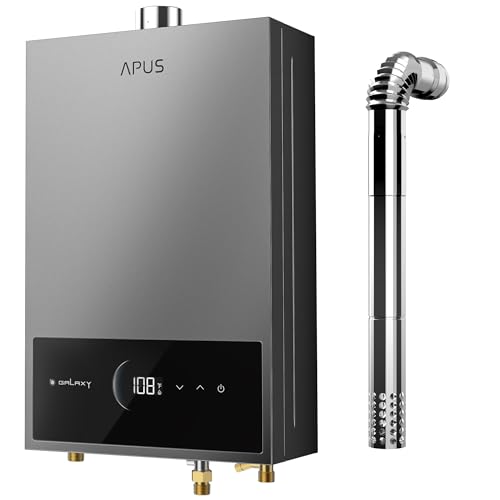
The APUS propane tankless water heater focuses on delivering 4.42 GPM with a 95,000 BTU input. It emphasizes stable temperatures using high-precision sensors and smart CPU control, maintaining water temperature within ±1°F of the target. The unit supports simultaneous hot water demands, such as two showers and a sink, while keeping temperatures consistent during peak usage. Efficiency is enhanced by oxygen-free copper heat exchangers and segmented combustion, delivering energy savings and durable performance. A straightforward digital display helps users monitor operation and set temperatures within a 95–140°F range. This model suits homes needing reliable on-demand hot water with precise control.
Tankless Water Heater Natural Gas (QERPRE)

The QERPRE natural gas tankless system offers 4.3 GPM with 100,000 BTU input and features a self-modulating temperature system to maintain water within ±1°F. It targets 2–3 outlets simultaneously, making it suitable for mid-sized homes. The model provides multiple smart modes, including a 4-Season mode to adjust for seasonal changes and a Kitchen Mode preset for precise 100°F output. With four sectional burners and a focus on precise control, the unit delivers steady temperatures for showers, dishes, and baths while aiming to conserve energy through intelligent modulation and efficient heat exchange. A solid option for reliable daily hot water without preheating delays.
Tankless Water Heater Propane with Vent Pipe (QERPRE)
This propane-powered model from QERPRE delivers 4.3 GPM at 100,000 BTU and includes an exhaust pipe for immediate setup. It features a self-modulating temperature system to keep output within ±1°F and a four-sectional burner for consistent comfort across colder and warmer seasons. The package emphasizes energy efficiency, reduced standby losses, and compact installation design with standard 1/2″ NPT fittings. It serves 2–3 outlets efficiently, making it a practical choice for mid-sized homes seeking dependable hot water with straightforward installation.
Rheem Natural Gas Condensing Tankless

The Rheem natural gas condensing tankless unit combines a high flow range with condensing efficiency, offering up to 9 GPM and 180,000 BTU. It includes an electric ignition and a broad temperature setting range, typically 100–140°F. This model targets households with higher hot water demands, such as larger families or homes with multiple bathrooms. Condensing operation enhances energy efficiency by recuperating heat from exhaust, reducing overall energy use. Installation is optimized for indoor settings with proper venting considerations, and Rheem’s reputation for reliability makes it a compelling choice for high-demand households seeking robust performance and steady hot water delivery.
Rheem RTG-70DVLN-3 High Efficiency Non-Condensing

The Rheem RTG-70DVLN-3 is a high-efficiency non-condensing indoor tankless water heater delivering up to 7.0 GPM from a 160,000 BTU input. It is designed for indoor installation and offers reliable hot water for typical 2–3 bathroom homes. Its non-condensing design prioritizes straightforward installation and consistent performance, with focus on rapid hot water delivery and durability. The unit is suitable for homes needing a strong flow rate without the complexities of condensing technology, combining solid performance with practical maintenance considerations.
CAMPLUX Climatech 3 Tankless Water Heater

The CAMPLUX Climatech 3 is a 4.22 GPM gas tankless water heater rated at 102,000 BTU. It targets compact homes, apartments, and mobile settings where space is at a premium. The unit provides precise temperature control with a sophisticated flow sensor and a smart chip achieving ±1°F stability. Anti-freeze protection helps maintain operation in cooler conditions, making it a practical option for year-round hot water needs in smaller spaces. It is designed for indoor installation and emphasizes steady performance, energy-conscious operation, and dependable on-demand hot water for multiple points of use.
Buying Guide: Key Purchase Considerations
- Flow rate vs. household demand: Determine how many fixtures you typically run simultaneously. Higher GPM models support more simultaneous uses without temperature drop.
- Gas type and venting: Choose propane or natural gas based on availability and home infrastructure. Consider venting requirements (indoor vs. outdoor) and whether a condensate venting system is needed.
- Efficiency ratings: Look for condensing units with higher energy efficiency (UEF or EF). Condensing models recover waste heat for better energy savings but may have higher upfront costs.
- Installation footprint: Assess space constraints and whether indoor or outdoor installation is preferred. Compact units can free up closet or utility space.
- Controls and smart features: Some models offer digital displays, fault alerts, and WiFi integration for remote monitoring and control, which can enhance user experience and maintenance planning.
- Maintenance needs: Quick flush and easy access to routine service can extend lifespan. Check for serviceability and availability of replacement parts in your region.
- Noise and combustion technology: Some units use segmented combustion or micro-flame technology for quieter operation and reduced gas consumption. Consider noise levels if the unit will be installed near living spaces.
- Budget and lifespan: Compare upfront costs with expected energy savings and warranty terms. Long-term reliability matters for continuous hot water supply.
When selecting a power vent water heater, align the model with your home size, peak hot-water needs, and installation constraints. Condensing models generally offer higher efficiency and lower operating costs over time, while non-condensing options may offer simpler installation and lower initial costs. Evaluating venting options, fuel availability, and the desired level of smart features will help identify the best long-term choice for your household.